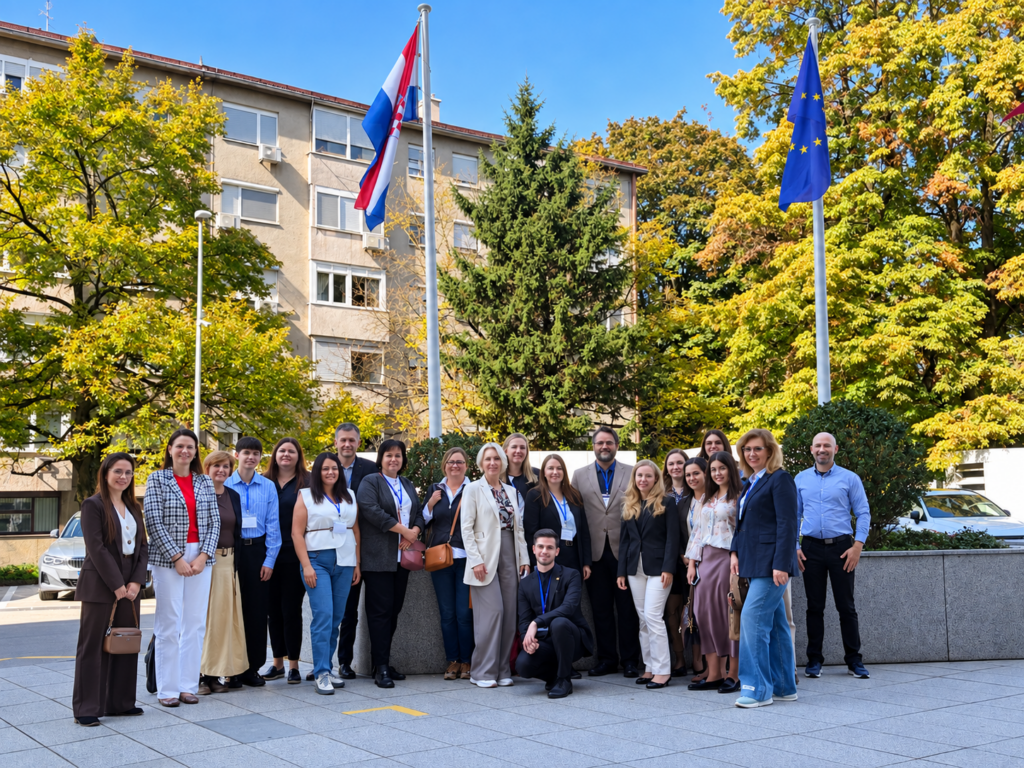
Ukraine’s preparations for a national emissions trading system (ETS) can draw on Croatia’s experience of coordinating public authorities and supporting businesses. A recent study visit of the Ukrainian delegation to Croatia showed how this cooperation works in practice, from emissions reporting and independent verification to customs procedures and the use of ETS revenues. The central lesson: Preparing institutions and operators early provides time to build the expertise and procedures needed to put the system into practice.
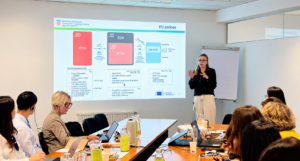
The Ukrainian interagency delegation visited Zagreb from 30 September to 2 October 2026. Hosted by Croatia’s Ministry of Environmental Protection and Green Transition, the three-day programme examined the implementation and expansion of the European Union Emissions Trading System (EU ETS), transitional arrangements for EU accession, and solutions to implementation challenges. It also offered an EU Member State’s perspective on the Carbon Border Adjustment Mechanism (CBAM).
The visit was supported by the GIZ project “Support for the Establishment of an Emissions Trading Scheme (ETS) in Ukraine”, financed by the German Federal Ministry for the Environment, Climate Action, Nature Conservation and Nuclear Safety (BMUKN) through the International Climate Initiative (IKI). The project supports Ukraine in developing the institutional capacity and procedures needed to establish a national ETS.
The delegation brought together representatives of Ukraine’s Ministry of Economy and Environment, the National Centre for GHG Emission Inventory, the Secretariat of the Verkhovna Rada Committee on Environmental Policy and Nature Management, and the Secretariat of the Cabinet of Ministers. They were joined by colleagues from the National Accreditation Agency of Ukraine, the State Environmental Inspectorate, the State Agency on Energy Efficiency and Energy Saving, and the GIZ project team. Their different responsibilities brought legislative, technical and supervisory perspectives to the discussions, helping participants consider how their work will need to connect within Ukraine’s future system.
Croatian installations, including industrial and energy facilities, began monitoring and reporting emissions during 2010–2012, before full EU ETS participation in January 2013 and EU accession that July. This preparation allowed authorities and operators to develop procedures and understand their responsibilities.
Authorities identified installations through government statistical databases, environmental reporting records and public calls. Training, monitoring plan guidance and consultations prepared operators for participation, supported by international technical assistance through expert exchanges, workshops and installation visits.
The experts also spoke openly about the difficulties they encountered. A small initial team had to navigate extensive legislation and complex procedures while helping operators, verifiers and inspectors develop the necessary knowledge. Building specialised expertise took time, and maintaining it required continuity within institutions.
The sooner Ukraine starts preparing all stakeholders for the national emissions trading system (ETS), the better. This will provide more time to address the challenges ahead, said Madlena Ožanić, Head of Service for Emissions Trading System at Croatia’s Ministry of Environmental Protection and Green Transition.
Institutional cooperation was a central theme. Croatia’s Ministry acts as the competent authority and national system administrator, with responsibilities for the Union Registry. It works closely with the Croatian Accreditation Agency, State Inspectorate and Environmental Protection and Energy Efficiency Fund. The Ministry of Finance’s Customs Administration plays a key role in implementing CBAM.
Each institution contributes distinct expertise. The Accreditation Agency accredits verification bodies to ensure competent, independent assessment of emissions reports. The State Inspectorate checks compliance with environmental legislation and ETS permits. The Ministry draws on these processes to administer the system and resolve implementation issues, and establishes criteria for allocating ETS revenues.
A working group connects the accreditation agency, verifiers and Ministry, supported by information exchange templates. Regular meetings and workshops address recurring problems and changing requirements. These arrangements illustrated the value of clear communication channels alongside formally defined responsibilities.
Technical sessions covered monitoring plan approvals, registry accounts and the steps operators and authorities follow each year to meet ETS obligations. Sessions on aviation and maritime transport examined the EU ETS’s expanding scope, how operators are identified and how responsibilities are assigned to authorities. Participants also explored Croatia’s preparations for ETS2, the separate system covering fuel use in buildings, road transport and additional sectors.
The Ministry’s openness towards operators stood out. Its support includes telephone and email guidance, individual consultations on monitoring and reporting, and regular meetings with operators, verifiers and inspectors. Timely explanations of regulatory changes and assistance with reporting tools help businesses keep pace with requirements. Support continues beyond the launch of the system, helping operators adapt to new rules and apply them correctly.
Clear guidance helps prevent incomplete monitoring plans, reporting errors and missed deadlines. Operators’ fulfilment of their obligations is essential to Croatia meeting its own responsibilities under the EU framework, making constructive relationships with businesses an integral part of effective administration.
CBAM discussions added a trade perspective. Ministry experts outlined Croatia’s implementation experience. Customs officials explained how the EU’s Combined Nomenclature product codes identify goods covered by CBAM and described the role of indirect customs representatives.
Hearing directly from the Customs Administration gave participants valuable insight into the procedures used to identify and process imported goods. It clarified the administrative requirements surrounding Ukrainian exports to the EU and demonstrated why climate authorities, customs officials and businesses need to cooperate. For Ukraine, this reinforced the importance of connecting emissions reporting expertise with knowledge of customs procedures.
The final day addressed Croatia’s carbon tax and ETS revenues. The Environmental Protection and Energy Efficiency Fund receives dedicated financing from emissions allowance auctions, linking carbon pricing with investment in the transition. Discussions highlighted the need for clear rules on allocating and using these resources, supported by oversight and accountability to ensure compliance with EU requirements. This placed revenue management alongside emissions monitoring and enforcement as a core part of ETS governance. Croatia’s experience offered Ukraine a reference for connecting these functions with wider climate objectives.
Ukrainian participants also discussed their national monitoring, reporting and verification system, current challenges and preparations for an ETS pilot phase. This exchange connected Croatia’s experience directly with the tasks facing Ukrainian institutions.
The visit provided examples Ukraine can draw on when developing monitoring plan approvals, coordinating accreditation and inspection, and supporting operators. With GIZ project support, the exchange strengthened professional dialogue on the procedures and institutional relationships needed for a national ETS. Croatia’s experience reinforced the importance of starting preparations early and sustaining cooperation and guidance as the system evolves.