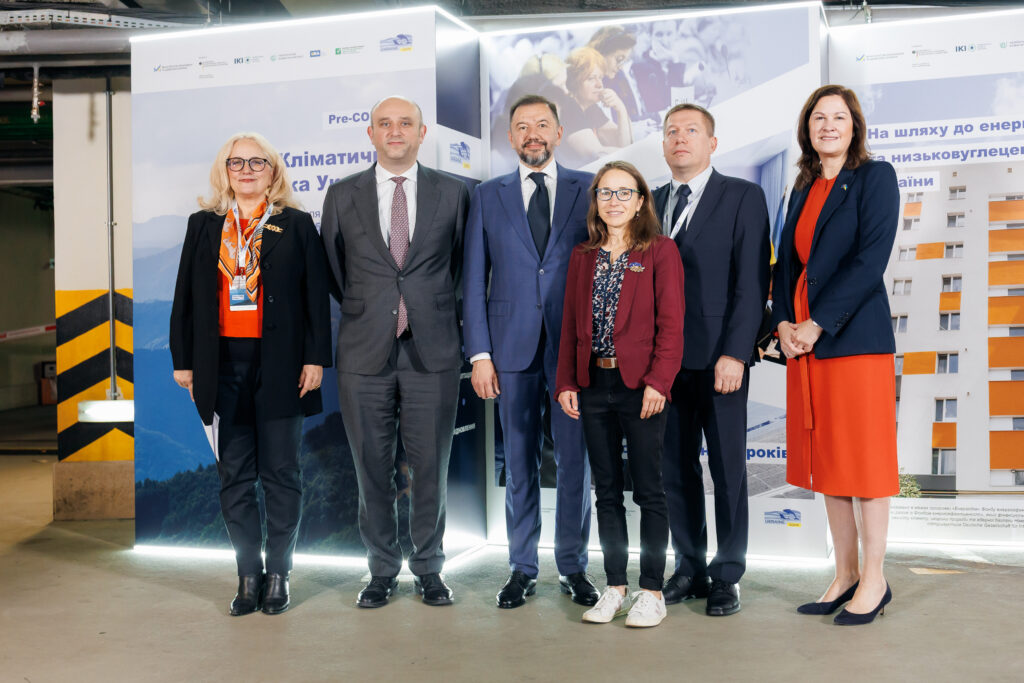
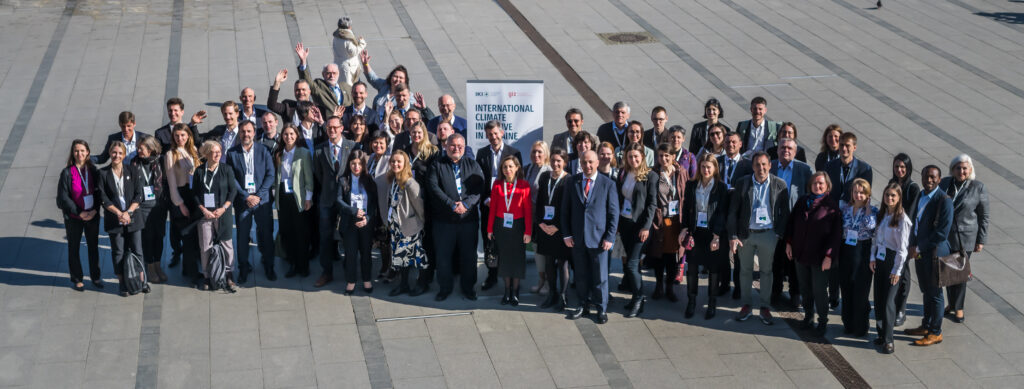
Mobilising climate finance for Ukraine’s green recovery, strengthening energy security and resilience, and ensuring that the climate impacts of Russia’s war against Ukraine are recognised internationally were among the key priorities discussed at the Pre-COP31 Climate Dialogue held in Kyiv on 21 October. The event brought together government officials, business representatives, international partners and civil society ahead of the 31st UN Climate Change Conference (COP31), which will take place in Antalya, Türkiye, from 9 to 20 November 2026. The conference is expected to attract around 150,000 participants, potentially setting a new record.
Discussions focused on decarbonising Ukraine’s economy during the war, green recovery, the climate impacts of Russian aggression, financing for climate projects and strengthening the country’s resilience to climate risks.
Opening the event, Oleksandr Kravchenko, Minister of Economy and Environment of Ukraine, stressed that climate policy is directly linked to national security and resilience. He outlined three key priorities for Ukraine’s delegation at COP31: ensuring that Ukraine’s territorial integrity is reflected in international climate decisions, attracting investment for recovery, and securing further international technical and expert support.
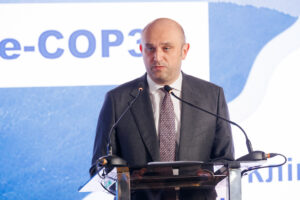
Climate policy is not a matter for the distant future — it is about our country’s resilience today. Russia is attacking our energy infrastructure, destroying ecosystems and polluting our water and land. The war is also generating millions of tonnes of additional emissions, and the international community must recognise and take these impacts into account now. Green recovery is therefore also a matter of security for Ukraine. Today’s meeting is not a formality for us; it is an opportunity to shape our position together ahead of COP31 in Antalya and contribute to the programme of the Ukrainian Pavilion, said Oleksandr Kravchenko.
Participants discussed how Ukraine can respond to the immediate demands of wartime while modernising its economy, expanding clean energy and pursuing its climate goals. Topics included improving energy efficiency, reducing dependence on fossil fuels, developing resilient infrastructure and creating conditions to attract private investment. Particular attention was given to the mechanisms under Article 6 of the Paris Agreement, green finance and insurance against war-related risks.
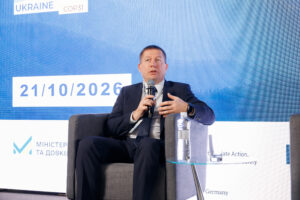
During a panel discussion, Oleksandr Krasnolutskyi, Deputy Minister of Economy and Environment of Ukraine, highlighted the scale of the climate and environmental damage caused by Russia’s aggression and the importance of bringing these impacts to the attention of the international community.
War is a climate driver. In four years of Russia’s full-scale aggression, around 311 million tonnes of CO₂ equivalent have been released into the atmosphere — roughly as much as some European countries emit in a year. The Black Sea, which we share with Türkiye, is contaminated by mines, unexploded ordnance and oil products, said Oleksandr Krasnolutskyi.
He also highlighted Ukraine’s progress in developing and implementing climate legislation and aligning it with European standards despite the challenges of the full-scale war. Ukraine will present this work to international partners at COP31.
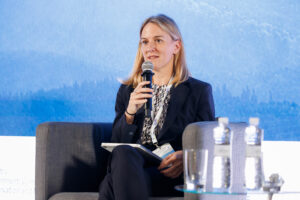
Daniela Funke, Director of GIZ Ukraine, emphasised the importance of maintaining momentum on climate action in Ukraine and the relevance of the country’s experience for the international community.
Ukraine is not waiting for the war to end before moving forward with climate action. It is shaping its climate policy right now — in the energy sector, in cities and across its institutions. GIZ is proud to support our Ukrainian partners in this work. At COP31, the world should see Ukraine not simply as a country that needs to be rebuilt, but as a partner already helping shape a climate-resilient future that Europe needs, she said.
The Ukrainian Pavilion will be an important part of the country’s participation in COP31. It will showcase practical solutions in climate policy, sustainable development and green recovery, while also highlighting the environmental and climate impacts of Russian aggression. This year, the Pavilion is expected to host more events than ever before, reflecting strong interest from Ukrainian businesses, communities, experts and civil society organisations in contributing to the international climate dialogue.
The event also brought together Oleh Bondarenko, Chair of the Verkhovna Rada Committee on Environmental Policy and Nature Management, alongside representatives of the Ministry of Foreign Affairs of Ukraine, the diplomatic missions of Australia and Türkiye, the European Commission, the EU Delegation to Ukraine, international financial institutions, the energy sector, expert organisations and civil society.
The dialogue concluded with proposals to help shape Ukraine’s position in the international climate negotiations and inform preparations for the Ukrainian Pavilion’s programme at COP31.
Pre-COP31 was organised at the initiative of the Ministry of Economy and Environment of Ukraine, with the support from the IKI Interface Ukraine and Implementation of the Paris Agreement in Ukraine (PAABS) projects, implemented by Deutsche Gesellschaft für Internationale Zusammenarbeit (GIZ) GmbH on behalf of the Federal Ministry for the Environment, Climate Action, Nature Conservation and Nuclear Safety (BMUKN) under the International Climate Initiative (IKI).