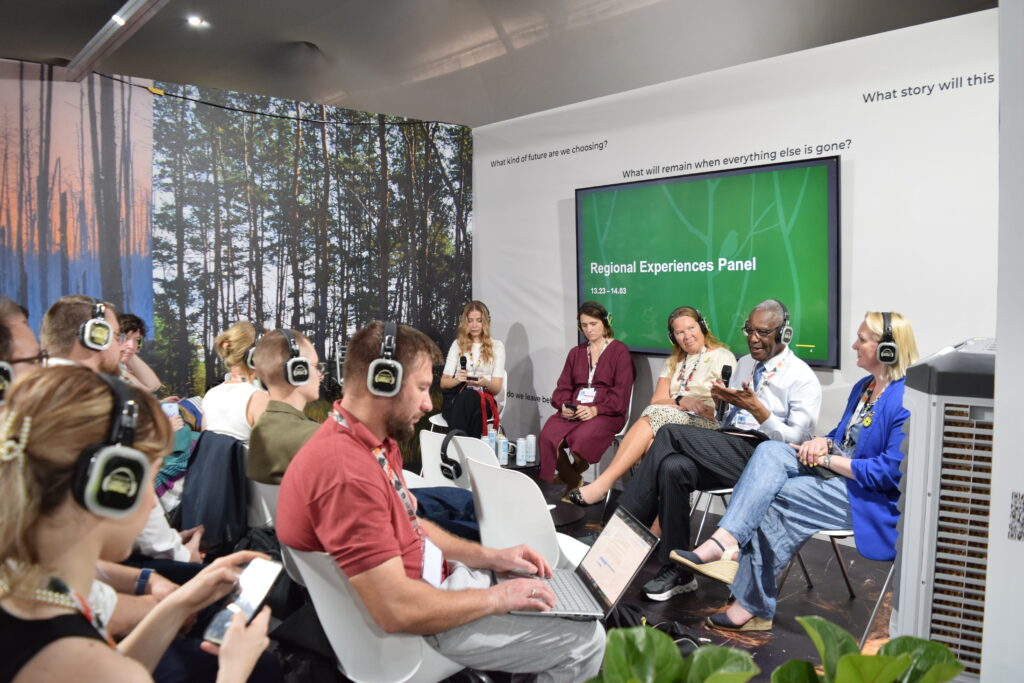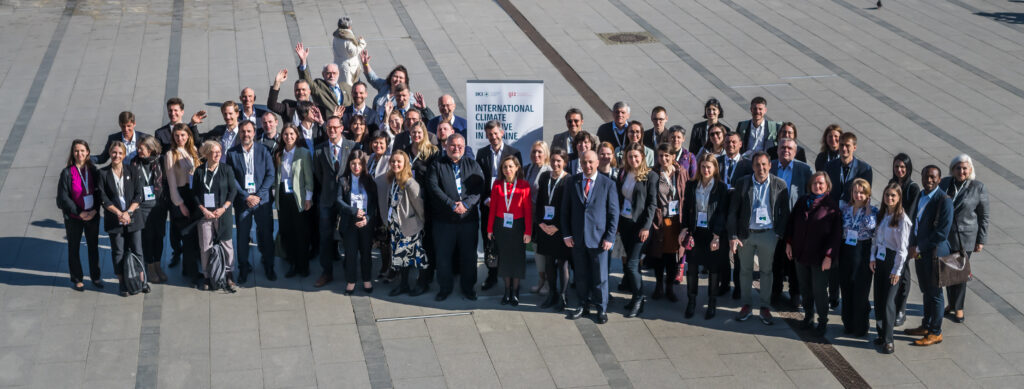
During the UN Climate Change Conference COP30 in Belém, Brazil, Ukraine showcased five key thematic areas: forests and biodiversity, climate policy, environmental damage caused by the war, food security, and green recovery.
The IKI Interface Ukraine project contributed to four side events that highlighted Ukraine’s key climate priorities: advancing the third cycle of Nationally Determined Contributions (NDC 3.0) and the Long-Term Low-Emission Development Strategy (LT-LEDS), promoting equality and inclusivity in the climate sector, and strengthening synergies between climate and nature protection actions to build a resilient and economically developed country. These areas of climate policy are also among the main focus areas of the IKI Interface Ukraine project, implemented by Deutsche Gesellschaft für Internationale Zusammenarbeit (GIZ) GmbH on behalf of the German Federal Ministry for the Environment, Nature Conservation, Nuclear Safety, and Consumer Protection (BMUKN) under the International Climate Initiative (IKI).
NDC 3.0: climate commitments in a country fighting for survival
On October 29, Ukraine adopted its Second Nationally Determined Contribution (NDC 2.0), setting a target to reduce greenhouse gas emissions by more than 65% from 1990 levels by 2035.
The second NDC, which Ukraine prepared in 2025 as part of the third NDC cycle (NDC 3.0), became the country’s first climate commitment under the Paris Agreement to be developed in the context of the full-scale war. It incorporates war-related infrastructure damage, economic uncertainty, and the country’s green recovery needs, while maintaining a pathway to climate neutrality by 2050.
At the Ukrainian Pavilion during COP30, a high-level discussion titled “NDC 3.0 in Practice: Turning Commitments into Climate Action” was held, organised by the Ministry of Economy, Environment and Agriculture of Ukraine, the IKI Interface Ukraine Project, and the Stockholm Environment Institute. The event brought together government representatives, leading research centers, and international organisations involved in shaping the next generation of climate commitments.
The session opened with Annika Markovic from the Stockholm Environment Institute (SEI), who emphasised the importance of integrating findings from the Global Stocktake and establishing transparent, investor-supported pathways for emission reductions.
Ukrainian experts highlighted that, for the first time, the country is integrating three critical dimensions in climate planning: war-related losses, reconstruction challenges, and EU integration requirements. In designing the new NDC, Ukraine is laying the groundwork for green recovery, emphasising energy efficiency, renewable energy development, modernised industry, and resilient infrastructure.
Participants stressed that NDC 3.0 should be a practical, transformative tool rather than a purely declarative document, featuring clear sectoral targets and mechanisms for public engagement. International partners recognised Ukraine’s steadfast climate ambitions despite the war and confirmed their readiness to deepen collaboration in modelling, policy development, and financing solutions.
Climate-Biodiversity Synergy: Ukraine’s second key focus at COP30
COP30, held in the heart of the Amazon, was uniquely focused on the interaction between climate and biodiversity under the Convention on Biological Diversity (CBD) and the UN Framework Convention on Climate Change (UNFCCC). Within this theme, the event “Synergies for Resilience: Integrated Path to Climate and Biodiversity Goals in Ukraine and Beyond”, organised by IKI Interface Ukraine and Oxford Net Zero, offered a key contribution from Ukraine.
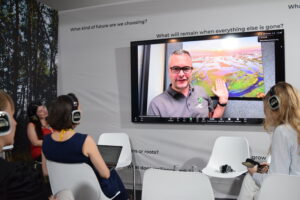
The event brought together representatives of the Ukrainian government, international experts, and leading researchers specialising in climate change and biodiversity. The expert discussion highlighted how the war exacerbates both the climate crisis and biodiversity loss. Threats include potentially mine-contaminated land covering 139,000 km² and economic downturns undermining the implementation of climate action.
Ukraine’s experience shows that addressing these challenges simultaneously generates a powerful resilience multiplier. Restoring damaged ecosystems, protecting natural wetlands, advancing climate-resilient agriculture, demining and rehabilitating forests — all these actions serve both to prevent and reduce the impacts of climate change and to safeguard nature.
Representatives of IKI Interface Ukraine stressed that, for the first time, Ukraine is building an integrated framework combining the National Energy and Climate Plan, the updated NDC, and the draft National Biodiversity Strategy and Action Plan (NBSAP). This approach enables Ukraine to advance both the Paris Agreement and the goals of the Global Biodiversity Framework (GBF), positioning the country as a leader and offering a model for nations navigating the dual challenges of armed conflict and reconstruction.
NDC2 and LT-LEDS: Coordinating Approaches for a Sustainable Transformation
At the Ukrainian Pavilion during COP30, a dedicated discussion focused on the alignment of two key strategic climate documents in Ukraine — the Second Nationally Determined Contribution (NDC2) and the updated Long-Term Low-Emission Development Strategy (LT-LEDS). This topic was explored in the side event “From Vision to Action: Aligning Ukraine’s NDC and LT-LEDS to Drive a Climate-Resilient, Low-Emission Transformation”, organised by the Ministry of Economy, Environment and Agriculture of Ukraine together with the UNDP in Ukraine and the IKI Interface Ukraine project.
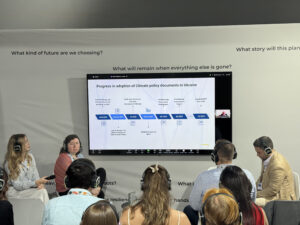

The event brought together Pavlo Karthashov, Deputy Minister of Economy of Ukraine; Oleg Bondarenko, Head of the Verkhovna Rada Committee on Environmental Policy and Nature Management; Nuri Ozbagatli, Climate Change Specialist for Europe and Central Asia at UNDP; and Ukrainian experts from the Institute for Economics and Forecasting of the National Academy of Sciences of Ukraine: Roman Podolets, Oleksandr Diachuk, and Halyna Trypolska.
Participants discussed approaches to developing effective climate policy, the legislative framework for implementation, and the modelling results underpinning NDC2, the Biennial Transparency Report (BTR), and LT-LEDS. They also highlighted mechanisms for ensuring consistency between documents — from unified methodologies to whole-of-society engagement.
Special attention was given to the challenges of planning under wartime conditions and the role of climate adaptation in driving Ukraine’s resilient recovery and aligning with EU standards.
Ukraine’s Green Recovery: the role of women, youth, and veterans
Despite the full-scale war, Ukraine is actively rebuilding and transforming its economy, accelerating the restoration of energy infrastructure, scaling up renewable energy, and integrating with the European Green Deal. Central to this transformation are the people who design, finance, build, operate, and govern these systems.
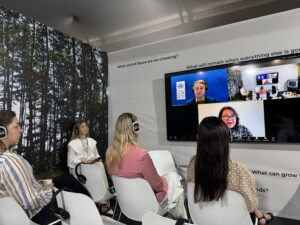
The discussion “Women at the Helm: Building a Resilient Workforce and Driving Leadership in Ukraine’s Energy and Climate Future”, organised by the Ministry of Economy, Environment and Agriculture, UNDP, and IKI Interface Ukraine, focused on equality and inclusivity in the climate sector. Participants explored not only opportunities for women in green sectors of the economy, but also support for veterans and youth, and the implementation of gender-sensitive and inclusive climate policies.
The speakers presented legislative and practical approaches, the results of socio-economic impact studies of the LT-LEDS 2050 project, as well as mechanisms for engaging all segments of society in decision-making and capacity development.
The discussion placed particular emphasis on measures to ensure gender equality and the active participation of youth in climate policy and recovery, as well as the need to account for both economic and non-economic losses from climate change.
This approach transforms climate policy into a fair and effective instrument that supports Ukraine’s resilient recovery, long-term economic security, and social stability.
Ukraine as a model for the world
Summing up the discussions, participants highlighted that Ukraine’s experience demonstrates that even under the most challenging conditions, it is possible to build a comprehensive climate policy that supports both economic and environmental recovery while fostering human capital development. The Ukrainian approach shows that nature-based solutions, digital monitoring, broad stakeholder engagement, and international support create real opportunities for sustainable development and economic recovery, even in the context of war and climate risks.
Ukraine offers the world not only technical solutions but also a model of hope, where revival is possible after destruction, and green reconstruction becomes the key to a safe, inclusive, and environmentally balanced future.
The Ukrainian Pavilion at COP30 was supported by the PAABS project. PAABS stands for “Supporting Ukraine in the implementation of the Paris Agreement and adaptation to the impact of climate change in the Black Sea region”.
The events are organised at the initiative of the Ministry of Economy, Environment and Agriculture of Ukraine with the support of the IKI Interface Ukraine project, Stockholm Environmental Institute, the United Nations Development Programme (UNDP) in Ukraine, and Oxford Net Zero. The project “IKI Interface: Supporting Ukraine towards Ambitious and Integrated Climate Policy (Green Ukraine)” is implemented by Deutsche Gesellschaft für Internationale Zusammenarbeit (GIZ) GmbH on behalf the Federal Ministry for the Environment, Nature Conservation, Nuclear Safety and Consumer Protection (BMUKN), within the framework of the International Climate Initiative (IKI).