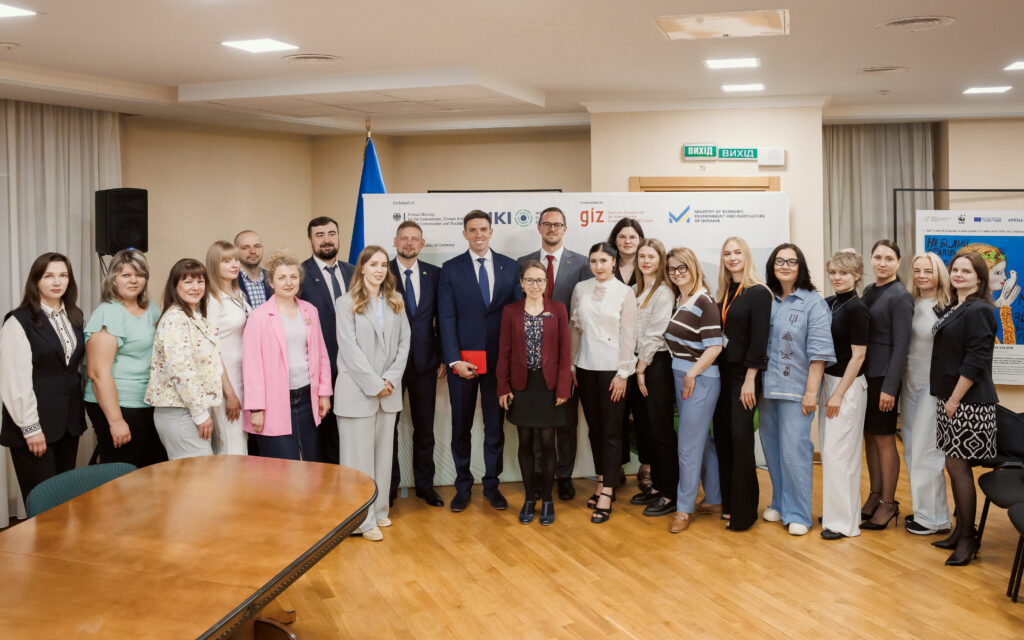
On 27 May, the Roundtable on Prevention and Control of Industrial Pollution Reform: Introduction of Unified Environmental Permits took place in Kyiv, jointly organised with the Ministry of Economy, Environment and Agriculture of Ukraine.
The event focused on further developing Ukraine’s environmental regulatory framework to align it with European Union standards. Representatives of government institutions, international partners, and the expert community gathered to discuss the future unified environmental permitting system for small and medium-sized enterprises (SMEs).
As part of its path towards EU membership, Ukraine is undertaking one of its most important environmental reforms: the implementation of the EU Industrial Emissions Directive (2010/75/EU). International expert support plays a crucial role in this process. Since 2019, Germany has been supporting the approximation of Ukrainian legislation to EU requirements and the implementation of the Industrial Emissions Directive through the “Best Available Techniques (BAT) for Ukraine” project, implemented by Deutsche Gesellschaft für Internationale Zusammenarbeit (GIZ) GmbH.
One of the key outcomes of this cooperation was the entry into force of the Law of Ukraine “On Integrated Prevention and Control of Industrial Pollution”, which transposes the provisions of the Directive into national legislation and introduces an integrated environmental permitting system for the country’s largest industrial installations.
At the same time, a significant share of Ukrainian enterprises, particularly SMEs, falls outside the scope of the Directive. For this reason, Ukraine is exploring the introduction of a unified environmental permitting system.
The objective of this system is to replace fragmented and complex permitting procedures with a single, clear digital process. This approach will help reduce administrative burden for enterprises while making environmental regulation more transparent, efficient, and user-friendly for both businesses and public authorities.
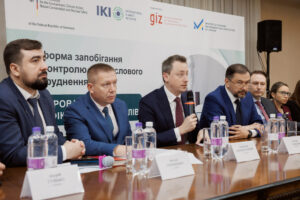
For the permitting reform to be successful, it is important that the environmental regulatory system covers not only large industrial installations but also small and medium-sized enterprises. Therefore, we are working to establish a modern, transparent, and digital framework that is aligned with EU standards and adapted to the needs of all categories of enterprises, said Oleksii Sobolev, Minister of Economy, Environment and Agriculture of Ukraine.
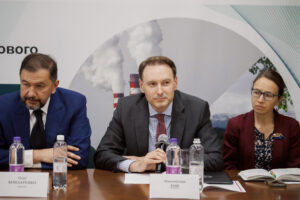
Highlighting the importance of international partnership and knowledge exchange, Maximilian Rasch, Chargé d’Affaires of the German Embassy in Ukraine, noted:
Germany has extensive experience in implementing effective environmental regulatory frameworks for small and medium-sized enterprises. We believe that developing a unified permitting system as a complement to the Industrial Emissions Directive framework is the right direction for Ukraine. We remain committed to sharing our experience and supporting the development of a modern, transparent, and digital permitting system.
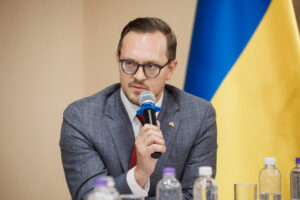
Gabriel Sauer, Director of the BAT project, also highlighted the project’s contribution to the implementation of European standards in the field of industrial pollution prevention and control.
For the past six years, the “Best Available Techniques (BAT) for Ukraine” project has supported the reform at every stage, from the development of the framework law, secondary legislation and technical regulations required for the implementation of the Directive, to the digitalization of the integrated environmental permitting system:
The implementation of the EU Industrial Emissions Directive lays the foundation for a clean, highly competitive, and future proof Ukrainian industry in line with European standards.
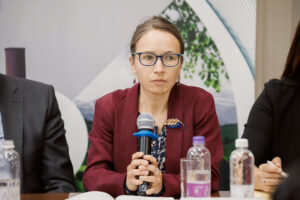
Daniela Goehler, Director of the project “Implementing the Paris Agreement in Ukraine (PAABS)” and Head of the Ukrainian Climate Office (UCO), highlighted the role of digital solutions in reforming Ukraine’s environmental regulatory system.
The cooperation on industrial pollution control started in 2019 and will continue through the PAABS project until 2029 based on the needs expressed by the Ukrainian government.
With the unified permit system, Ukraine is developing one of the most advanced IT solutions for environmental governance in Europe. It brings transparency and eases bureaucratic burden for companies, said Daniela Goehler.
The event was organised jointly by the projects “Best Available Techniques (BAT) for Ukraine” and “Supporting Ukraine in the implementation of the Paris Agreement and adaptation to the impact of climate change in the Black Sea region (PAABS),” implemented by Deutsche Gesellschaft für Internationale Zusammenarbeit (GIZ) GmbH on behalf of the German Federal Ministry for the Environment, Climate Action, Nature Conservation and Nuclear Safety (BMUKN) under the framework of the International Climate Initiative (IKI).