How does an emissions trading system function in a country that has been developing its climate policy for over 30 years? Which solutions allow companies to remain competitive while simultaneously reducing greenhouse gas emissions? And how does public policy incentivise industry to invest in decarbonisation?
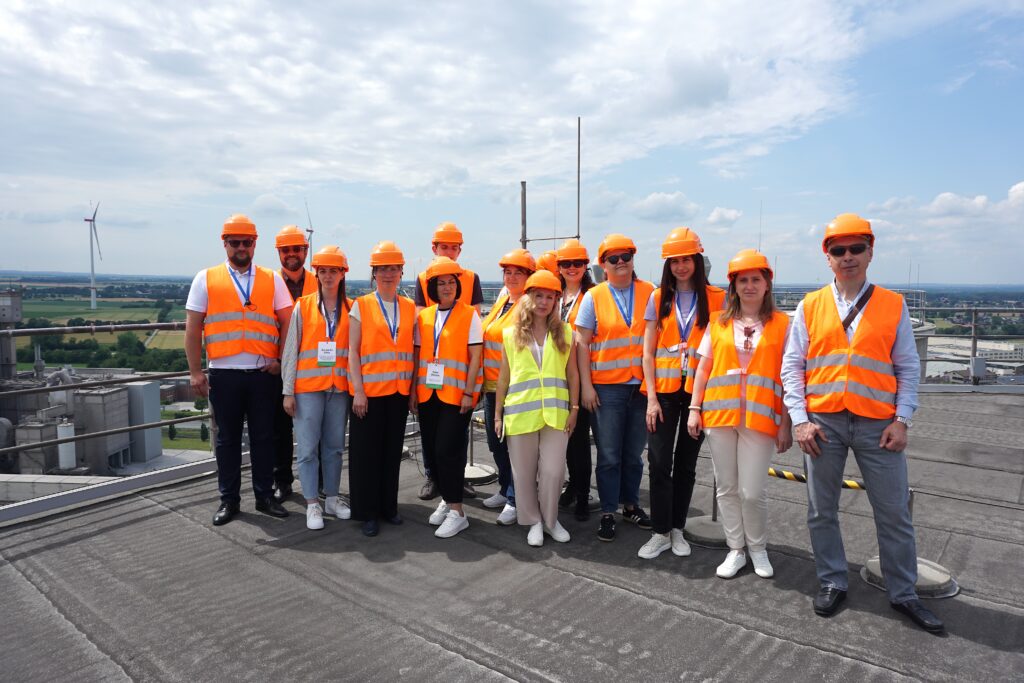
These were the key questions explored by a Ukrainian interagency delegation comprising representatives of the Gas Transmission System Operator of Ukraine, Interpipe, the National Center for Greenhouse Gas Inventory (NCI), Naftogaz of Ukraine, and the Secretariat of the Cabinet of Ministers of Ukraine. The study visit to Germany was organised by GIZ project “Support for the Establishment of an Emissions Trading Scheme (ETS) in Ukraine” which is financed by the German Federal Ministry for the Environment, Nature Conservation and Climate Protection (BMUKN) / International Climate Initiative (IKI).
This interagency composition enabled in-depth discussions on the practical aspects of implementing greenhouse gas emissions trading in line with state policy requirements and the needs of both industry and the energy sector.
From 22–24 June, the Ukrainian delegation visited energy and industrial installations in the German federal state of North Rhine-Westphalia (NRW) and participated in expert discussions on the functioning of the European Union Emissions Trading System (EU ETS), the Carbon Border Adjustment Mechanism (CBAM), monitoring, reporting and verification (MRV) systems, and practical approaches to decarbonising energy-intensive industries.
The EU Emissions Trading System: From Policy to Implementation at Installation Level
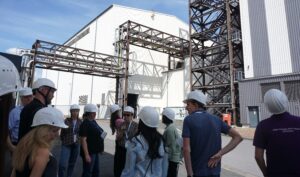
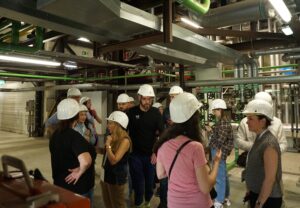
The programme commenced with a site visit to the Trianel GmbH (Gas Power Plant, Hamm), providing participants with direct insights into the structural influence of the EU ETS on the modern power generation sector.
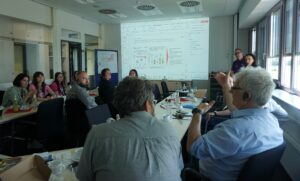
Plant experts outlined the nexus between natural gas tariffs, CO₂ compliance costs, and power market pricing. Key focus areas included the critical role of balancing power in supporting renewable energy integration and the influence of EU decarbonization targets on long-term asset investment.
The delegation also evaluated facility modernisation under Best Available Techniques (BAT) guidelines, the deployment of continuous emissions monitoring, and its structural integration into current industrial pollution reforms and integrated environmental permitting.
Practical Experience from the Cement Sector: EU ETS Reporting in Practice
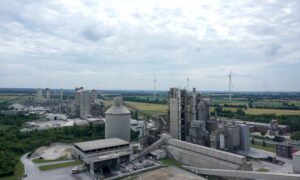
On the following day, 23 June, the delegation conducted a site visit to Spenner GmbH & Co. KG, a prominent cement manufacturer actively executing a comprehensive corporate strategy to achieve full climate neutrality by 2045.
Throughout the visit, the Ukrainian experts were thoroughly briefed on the complete emissions MRV lifecycle, encompassing everything from primary data collection to final submission to the competent German authority via the designated electronic reporting platform.
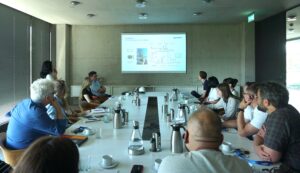
Of particular interest were practical examples of determining CO₂ emissions based on the company’s actual production data, common errors made by operators when calculating carbon in raw materials and products, as well as requirements for measuring equipment.
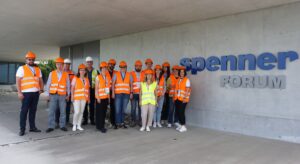
Furthermore, a dedicated session was devoted to the utilisation of alternative fuels, the deployment of sustainable biomass certified under international frameworks such as Sustainable Biomass Program (SBP) and Sustainable Resources Verification Scheme (SURE), and the strategic role of circular waste management in mitigating greenhouse gas emissions.
CBAM and the Future of Ukrainian Exports
The third day began with a training session delivered by German verifier Rainer Winter. He provided a detailed overview of the development of the EU ETS, including its four trading phases, the principles of free allocation of allowances, mechanisms to prevent carbon leakage, and the use of sectoral benchmark indicators.
Special attention was given to the CBAM, which is already significantly affecting Ukrainian exporters to the European Union. Participants examined its operational framework, its linkages with emissions trading systems, and its expected evolution beyond the transitional phase.
ThyssenKrupp: A Large-Scale Example of Heavy Industry Decarbonisation
The final stage of the visit was a tour of the ThyssenKrupp AG steelworks—one of the largest steel producers in Europe, with production facilities exceeding the size of the Principality of Monaco.
Company representatives presented an ambitious decarbonisation programme aimed at achieving climate neutrality by 2045. A central component of this transformation is the construction of a new production installation, initiated in 2024, which will operate on hydrogen and renewable electricity instead of coal. The installation is expected to become operational in 2027–2028, depending on economic conditions.
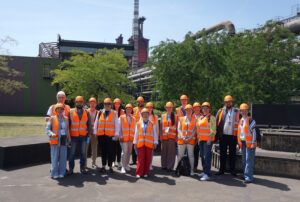
Experts analysed the project’s financial structure as a key focus area. Direct investment in construction amounts to approximately €3 billion, while total projected operating costs are estimated at nearly €30 billion. The project received €2 billion in public grant support: 70% financed from the German federal budget and 30% from regional state of NRW funds. This support was approved by the European Commission under EU State Aid rules specifically tailored for cross-border strategic initiatives (IPCEI) to accelerate industrial decarbonisation.
The ThyssenKrupp case demonstrated that the transition to low-carbon production requires an integrated approach combining innovative technologies, long-term public policy, stable financing mechanisms, and substantial industrial investment. For Ukraine, this example is particularly relevant in the context of preparing for the implementation of greenhouse gas emissions trading, illustrating how market-based climate instruments can be combined with public support mechanisms to accelerate industrial decarbonisation.
Practical Knowledge for Ukrainian Reforms
The study visit enabled Ukrainian experts to gain first-hand experience of the implementation of European climate legislation in installations operating under the EU ETS for many years.
At the same time, exposure to real-world decarbonisation cases demonstrated that emissions trading is not only an environmental instrument but also a key driver of industrial modernisation, innovation, and competitiveness.
For the Ukrainian interagency team, the visit provided an opportunity not only to gain practical insights into the functioning of greenhouse gas emissions trading in Europe, but also to establish professional dialogue with German industry representatives and experts. The experience will further contribute to improving MRV systems, developing regulatory frameworks, and implementing market-based climate instruments in line with European Union legislation.