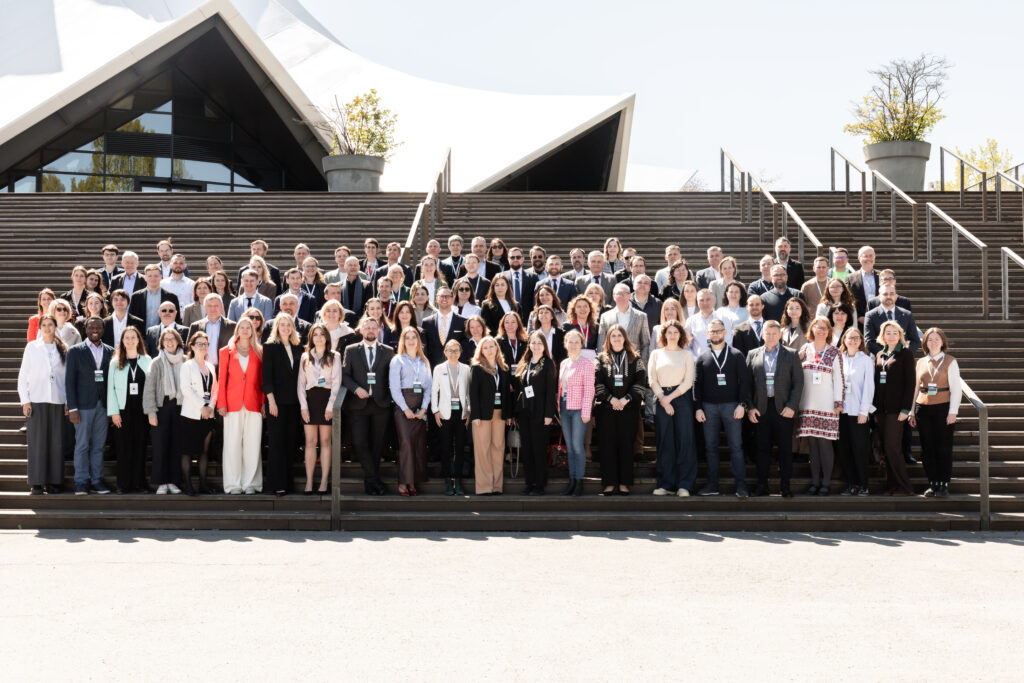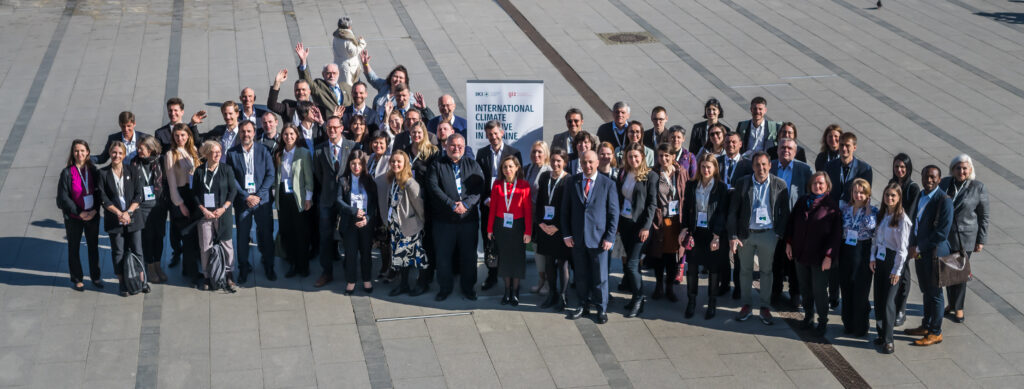
On 28–29 April 2026, a two-day workshop titled “Supporting Ukraine’s Green Recovery and Resilience on the Pathway to EU Accession” took place in Berlin. The event was organised by the IKI Interface Ukraine project on behalf of the German Federal Ministry for the Environment, Climate Action, Nature Conservation and Nuclear Safety (BMUKN) under the framework of the International Climate Initiative (IKI). It brought together over 120 participants, including representatives of the governments of Ukraine, Germany, European Union, experts, IKI projects as well as implementing partners.
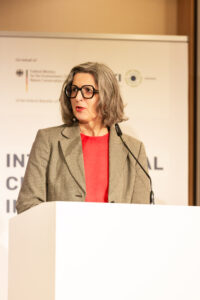
Dr. Heike Henn, Director General “International Climate Action”, BMUKN, reaffirmed Germany’s commitment to Ukraine’s recovery, noting:
Supporting Ukraine is a key priority for the German government. Russia’s war of aggression is causing severe economic, human, and environmental damage. Therefore, our engagement is focused on Ukraine’s future in Europe — a future that is sustainable, peaceful, economically sound, and in harmony with nature.
Discussions explored how EU-aligned reforms, a green recovery underpinned by sustainable infrastructure and green investments, and institutional cooperation can contribute to strengthen Ukraine’s resilience and lay the foundations for a green recovery of Ukraine while supporting its pathway towards EU accession and long-term economic resilience. In addition, bilateral meetings between representatives of the German and Ukrainian governments were held within the framework of the workshop to align shared objectives and define joint steps for cooperation in the climate, environmental and biodiversity sector.
BMUKN, through IKI, supports Ukraine in green recovery, resilient reconstruction, and alignment with EU standards. In particular, on behalf of the German Federal Government, IKI supports Ukraine in the comprehensive implementation of climate, environment and biodiversity policies. This includes work on Nationally Determined Contributions (NDCs), emissions trading systems (ETS), the Carbon Border Adjustment Mechanism (CBAM), carbon taxation reform, climate change adaptation and biodiversity conservation. BMUKN’s support, through IKI, also focusses on energy resilience with energy efficiency improvements and promotion of renewable energy solutions, as well as on green finance development and other key areas for Ukraine’s green recovery.е
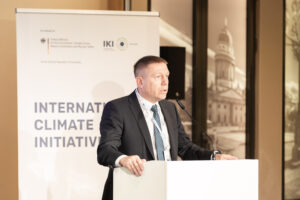
On the Ukrainian side, the focus remains on synchronizing these efforts with EU standards. Oleksandr Krasnolutskyi, Deputy Minister of Economy, pointed out:
Such workshops provide an opportunity for government, international partners, and civil society to engage in dialogue. We hear different opinions on the same challenges, and it is important to find common ground that enables progress in the right direction. For Ukraine, that direction is European integration.
Ukraine’s Green Recovery and EU Integration: Advancing Climate, Environmental and Biodiversity Policies, and Energy Resilience
Ukraine’s recovery and reconstruction are intertwined with its path to EU membership: rebuilding infrastructure, industry, municipalities, and public institutions to European standards offers a chance for recovery while driving long-term economic modernization and resilience. A green, future oriented economy requires effective climate and biodiversity governance, strategic planning, and coherent, comprehensive climate and environmental policies aligned with EU objectives.
A major milestone in Ukraine’s climate policy development was the adoption of its second Nationally Determined Contribution (2035-NDC) under the Paris Agreement on 29 October 2025, setting a target to reduce emissions by more than 65% compared to 1990 levels by 2035.
The document reflects the impact of the war on Ukraine’s economy, including damage to infrastructure, limited emissions monitoring capacity, and broader economic challenges. At the same time, it outlines key decarbonisation pathways and provides a foundation for the country’s green recovery and its commitment to achieving climate neutrality by 2050.
The detailed planning phase for the implementation of Ukraine’s second NDC (2035-NDC) is currently underway, including the alignment and revision of targets, policies, and measures within the National Energy and Climate Plan (NECP).
Germany and the European Union reaffirmed their commitment to supporting Ukraine in building a modern, resilient, and future-oriented economy anchored in European values and standards.
• implementation of 2035-NDC;
• revision of the NECP in line with updated climate targets;
• adoption of the Long-Term Low Emission Development Strategy (LT-LEDS);
• alignment of legislation with European Union standards.
The synergy between the NDC, NECP, and LT-LEDS forms the basis for coordinated government action towards achieving climate neutrality by 2050.
Dr. Heike Henn, Director General “International Climate Action”, Federal Ministry for the Environment, Climate Action, Nature Conservation and Nuclear Safety (BMUKN), emphasized that Germany is fully committed to bolstering Ukraine’s climate-related objectives:
For us, the guiding principle is Ukraine’s climate policy and its response to climate change. I must say, Ukraine is a truly ambitious partner, and we are here to fully support this ambition. Therefore, our cooperation spans from developing an emissions trading system to implementing energy efficiency measures and expanding renewable energy sources.
The workshop also addressed energy as a vital theme within the green transformation and the European integration process. Energy resilience, decarbonisation, and alignment with EU climate and energy policies were highlighted as essential for a sustainable and future-oriented recovery, and the National Energy and Climate Plan (NECP) as a key strategic document defining priorities for recovery and decarbonization.
The urgency of this transformation is underscored by the immense challenges on the ground. In the context of the Russian full-scale war, Ukraine’s energy sector remains among the most heavily affected. According to the World Bank’s assessment (RDNA4, February 2025), direct damages have exceeded USD 195 billion (EUR 166 billion), with housing, transport, and energy infrastructure among the hardest hit sectors.
BMUKN, via IKI, specifically supports this through:
• development of renewable energy sources (RES);
• energy efficiency improvements;
• carbon pricing and market mechanisms, including the introduction of a national Emissions Trading System (ETS), reform of the CO₂ tax, preparation for the CBAM.
At the same time, discussions during the workshop underlined that Ukraine’s green recovery and progress towards EU accession cannot be achieved without integrating biodiversity considerations into reconstruction and policy planning.
According to Oleksandr Krasnolutskyi, Deputy Minister of Economy of Ukraine, the country is actively building the legal and practical framework for a green transition:
Ukraine is currently working on launching the mechanisms under Article 6 of the Paris Agreement, the emissions trading system, and the implementation of its updated NDC (2035-NDC). Biodiversity is also among the priorities, in particular the development of a strategy for its conservation, including the nature reserve fund. As Ukraine is currently at war, it is necessary to restore nature while taking current challenges into account.
Russia’s full-scale invasion has caused significant damage not only to cities and people, but also to Ukraine’s ecosystems, making biodiversity conservation an increasingly urgent issue. For this reason, biodiversity conservation was identified as one of the key focus areas of the workshop, as an integral component of green recovery and Ukraine’s EU integration efforts.
Key topics of discussion included the development of the National Biodiversity Strategy and Action Plan (NBSAP), preparations for the 17th meeting of the Conference of the Parties to the Convention on Biological Diversity (CBD), and the implementation of the Kunming-Montreal Global Biodiversity Framework, which has served as the basis for Ukraine’s draft NBSAP.
The NBSAP was pre-approved by the Cabinet of Ministers of Ukraine in June 2026 and officially published on July 15, 2026. The strategy is accompanied by an action plan, which IKI projects support by implementing specific actions.
Special attention during the workshop was given to aligning Ukraine’s biodiversity policy with European standards and EU integration commitments. The NBSAP is aligned with decisions of the Convention on Biological Diversity and EU requirements and is expected to serve as a foundation for Ukraine’s long-term environmental policy.
The document also takes into account EU integration requirements under Chapter 27 “Environment and Climate Change”, in particular the provisions of the EU Habitats and Birds Directives, as well as other key EU legal acts related to the conservation of biodiversity. Relevant measures are integrated into Ukraine’s EU integration action plan approved by the Cabinet of Ministers on 1 April 2026.
Background: IKI Interface Workshop
The annual IKI Interface workshop is organised to facilitate dialogue between Ukraine and Germany, as well as among IKI projects in Ukraine. This year’s event brought together 18 implementing and partner organisations, creating valuable opportunities for networking among institutions involved in bilateral, regional, and global IKI projects in Ukraine.
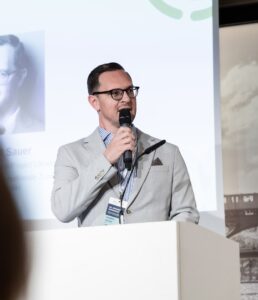
These two days demonstrated the importance of multi-level cooperation — from intergovernmental dialogue between Ukraine, Germany and the EU to the practical work of IKI projects on the ground. Through this collaboration, we are not only exchanging experience, but also gradually shaping more coherent and effective solutions for Ukraine. This coordinated effort brings us closer to our shared goal — a green, restored, and resilient Ukraine within the EU, summarised the outcomes of the two-day workshop Gabriel Sauer, Project Director of IKI Interface Ukraine.
The IKI Ukraine workshop 2026 was organised by the project “IKI Interface: Supporting Ukraine towards Ambitious and Integrated Climate Policy (Green Ukraine)”. The project is implemented by Deutsche Gesellschaft für Internationale Zusammenarbeit (GIZ) GmbH on behalf of the German Federal Ministry for the Environment, Nature Conservation, Nuclear Safety and Consumer Protection (BMUKN) under the International Climate Initiative (IKI), in cooperation with the Ministry of Economy, Environment and Agriculture of Ukraine.