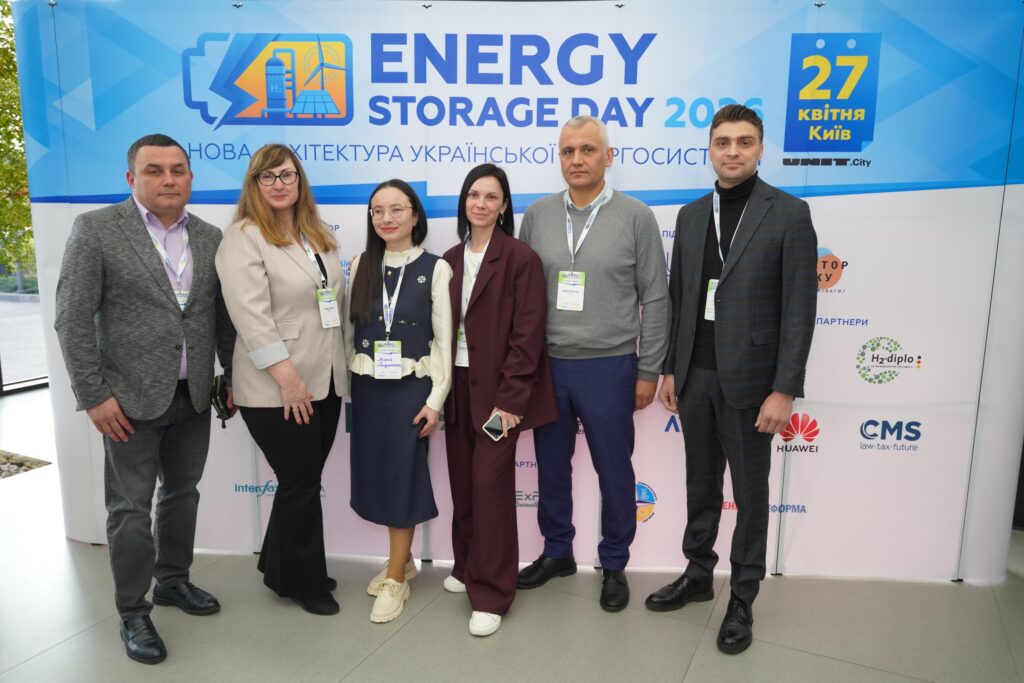
On 27 April, Kyiv hosted the first industry conference Energy Storage Day 2026, organised by the Ukrainian Wind Energy Association (UWEA). One of the key topics was the role of green hydrogen as a long-term energy storage solution and a building block of Ukraine’s new energy system architecture.
As part of the conference, the H2-diplo team in Ukraine moderated the closing panel discussion “Green Hydrogen – A Promising Component of the New Energy System Architecture”, bringing together representatives of project developers, infrastructure operators, industry associations and engineering companies. The panel focused on ongoing green hydrogen projects, the readiness of grid and gas infrastructure, existing regulatory gaps and the potential role of Ukraine in the emerging European hydrogen economy.
A central theme of the discussion was the interaction between battery energy storage systems (BESS) and hydrogen. Based on concrete project experience, developers and engineers showed that integrated solutions combining renewables, battery storage and electrolysers can reduce stress on the grid, extend operating hours of hydrogen plants and make better use of surplus generation. In this perspective, “storage in electrons” and “storage in molecules” are not competitors, but complementary components of a future-proof energy system.
Representatives of the gas transmission sector underlined that Ukraine’s gas transmission system (GTS) still has significant spare transport capacity, and that selected high‑diameter pipelines, particularly in Western Ukraine, are already being assessed for their potential future use for hydrogen transport. At the same time, hydrogen-related work within the TSO is largely driven by expert initiative, as the primary budgetary focus remains on ensuring secure gas transmission under wartime conditions.
The discussion also highlighted growing interest in hydrogen projects in Ukraine from both domestic and international investors. The first hydrogen valleys are emerging, feasibility studies are being prepared, universities are launching new training programmes, and companies continue to work on project development despite the ongoing war. Against this backdrop, the adoption of an updated Hydrogen Strategy, alignment of national legislation with EU standards and the creation of clear, predictable rules for investors remain key preconditions for unlocking Ukraine’s full hydrogen potential.
H2-diplo Ukraine will continue to support Ukrainian partners in advancing the hydrogen agenda, facilitating knowledge exchange and strengthening Ukraine’s integration into the European and global hydrogen landscape through expert dialogue, analytical support and dedicated events.