Four years after Russia’s full-scale invasion of Ukraine, protected areas continue to face unprecedented challenges. Severe reductions in state funding, increasing pressure on natural resources, and the broader social impacts of the war have placed national parks under significant strain. In response, the Frankfurt Zoological Society has focused on ensuring that protected areas remain operational while also supporting communities affected by the war.
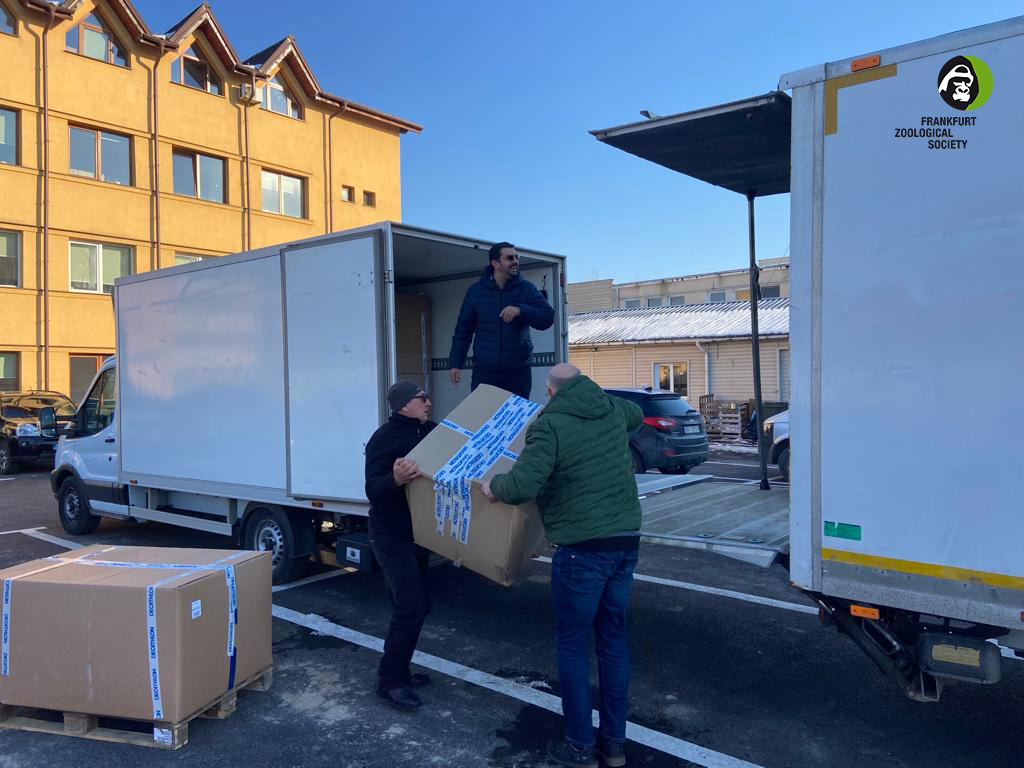
From the first days of the invasion in February 2022, the Frankfurt Zoological Society began delivering emergency relief supplies to protected areas across the country. Thanks to the generous support of partners and donors, essential assistance was provided rapidly, including food and medicine, beds and mattresses, and the establishment of more than 3,000 sleeping places for people seeking shelter. In the weeks and months following the Russian attack, over 100 tonnes of food, medical supplies, and equipment were transported to 35 protected areas across Ukraine, including sites in the east near the front line where people found refuge in national park administrative buildings.

After the initial emergency phase, the Frankfurt Zoological Society shifted its focus toward sustaining the basic functioning of protected areas. The organisation began providing a critical operational lifeline to 13 protected areas in the Carpathians whose state funding had been dramatically reduced. Quarterly operational cost support was introduced to cover essential needs such as fuel, repairs, office supplies, and building materials. A survey conducted in November 2024 showed that without this support, 50% of park administrations would have been able to carry out only minimal administrative work, while another 34% reported that their operations would have been severely constrained.
Maintaining operational national parks has also proven crucial for protecting forests during wartime. Despite strong economic pressure and increased demand for firewood following attacks on Ukraine’s energy infrastructure, clear-cutting in the monitored areas remained below the project target and continued to decline. This demonstrates the importance of keeping protected areas functional and properly staffed even under extremely challenging conditions.
As the war continues, protected areas have taken on an additional social role.
In the midst of a war that claims lives every day, destroys cities, and leaves long-term damage to fields and waterways, a legitimate question arises: Why continue to support national parks in such an exceptional situation? Because protected areas in Ukraine are now more than places dedicated to nature conservation. They are places of refuge for people. The forested landscapes of the Carpathians offer families a brief respite from the realities of war. Children from Kyiv and other major cities spend days away from air raid sirens and constant uncertainty. They sleep through the night again. They can breathe. — Michael Brombacher, Head of European Programmes at the Frankfurt Zoological Society.
Together with partners in the Carpathian protected areas, the Frankfurt Zoological Society has therefore established a large-scale environmental education programme. Dedicated buses bring groups of children from different regions of the country to the mountains, where they can reconnect with nature and experience a sense of safety and stability. Over the past year and a half, more than 1,300 children have taken part in excursions into the wild landscapes of the Carpathians.
The project has also expanded to support people directly affected by the war. Two permanent outdoor environmental education camps have been established in Skolivski Beskydy National Park and Cheremoskyi National Park. These camps are designed not only for schoolchildren and youth but also for veterans and civilians severely affected by the conflict, providing access to nature and structured programmes aimed at supporting psychological recovery from war trauma.